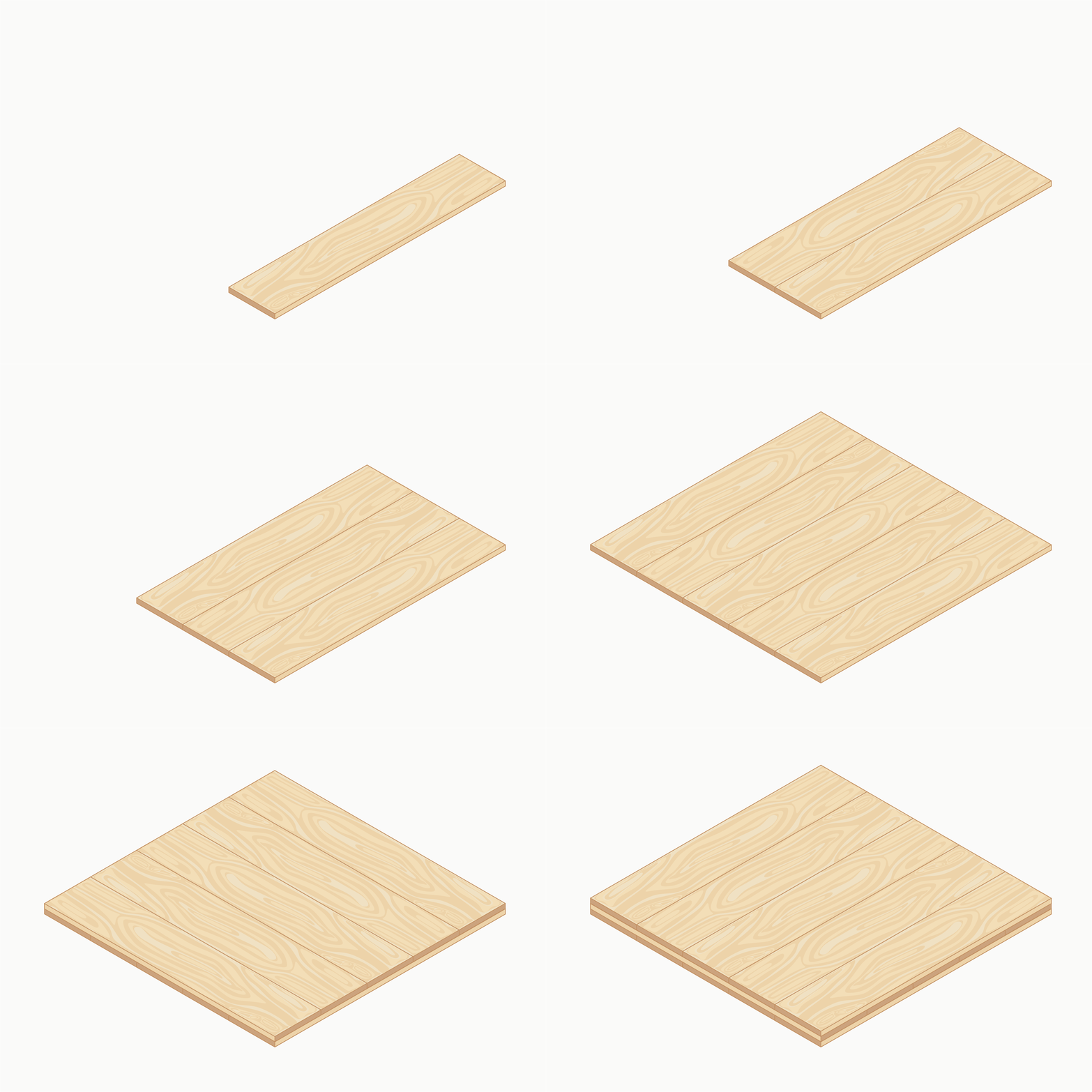
CLT or Cross Laminated Timber is a material that consists of planks (or lamellas) of sawn, glued, and layered wood, where each layer is oriented perpendicular to the previous. By joining layers of wood at perpendicular angles, structural rigidity for the panel is obtained in both directions, similar to plywood but with thicker components. In this way, the panel has great tensile and compressive strength.
Popularized in Europe and gradually gaining attention in the rest of the world, Cross Laminated Timber stands out for its strength, appearance, versatility, and sustainability.
It's a sustainable material because it's composed of wood,
a renewable resource, and doesn't require the burning of fossil
fuels during its production. Its potential for small constructions has
been noted because of its interesting appearance and structural
strength. Currently, there are even skyscrapers being built with
CLT parts.
The panels can function as walls, floors, furniture, ceilings, and roofs; CLT's thickness and length can be adaptable to the demands of each project. Generally, panels made of CLT are assembled and cut in their production, already foreseeing the joints, openings, and drills specified in the design. The parts are then transported to the site, and then assembly takes place there.
Written by Eduardo Souza | Translated by José Tomás Franco
May 20, 2018
archdaily.com